
Search results for 'solar wind'
-
The Trappist Planets and Magnetic Fields
 By now, you’ve probably heard the news that NASA has discovered not 1, not 2, but 7 “Earth-like” planets revolving around nearby dwarf star, Trappist-1. These planets are thought to be in the habitable zone and could maybe, one day, sustain human life. Continue reading →
-
A New Atmosphere for Mars? A New Home For Us?
 From February 27 to March 1, 2017, NASA's Planetary Science Division hosted its Planetary Science Vision 2050 community workshop at their headquarters in Washington DC. The world’s greatest minds in science and technology descended upon the workshop to participate in panel discussions and presentations regarding the future of space exploration. Continue reading →
-
Pole Reversal: What Happens When Our Magnetic Shield Loses Strength?
 Extending roughly 40,000 miles toward the sun and far beyond the Moon on the side facing away from it, the magnetic layer known as the magnetosphere protects the planet from the charged particles of solar wind and cosmic rays that could otherwise strip away our upper atmosphere over time. That might seem like a permanent feature of the planet, and for the most part, it is. Continue reading →
-
Ancient Magnetic Pottery
 Evidence of Earth’s magnetic field is all around us. Animals use it to navigate, the spectacular display of the Aurora Borealis is generated by it, even your compass pointing north—all possible because of this mysterious force. However, while we experience the benefits of the magnetic field on a daily basis (it also helps shield our atmosphere from the solar wind), its effects are nothing new. The magnetic field has quietly been at work for billions of years. Continue reading →
-
The Magnetic Molten River
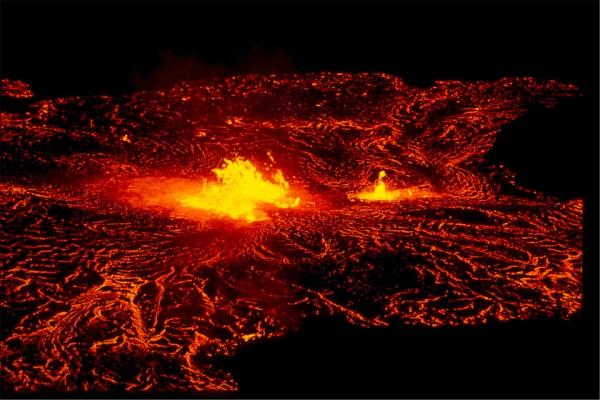 In December 2016, scientists discovered a river of molten iron, coursing at astounding speeds underneath Canada, Alaska and Russia. What is more surprising is how long the river went completely unnoticed. By studying Earth’s magnetic field, geologists were able to detect this phenomenon and assess what it means for the entire planet. Continue reading →
-
The Magnetic North Pole
 As the holidays approach, the North Pole gets a lot more attention. This might have something to do with the bearded guy in the red suit allegedly living up there and making toys. Santa Claus aside, there are many fascinating facts about the North Pole you may not know. And guess what—many of them involve magnetism! Here’s a look at just a few of the ways magnets and magnetism feature in the great white north. Continue reading →
-
Magnetosonic Waves: The Voice of the Universe
They say in space, no one can hear you scream, or sing, or even talk. That’s because outer space is a vacuum. In order for sound to travel, it needs to pass through something. In Earth’s case, sounds travels through air molecules. However, deep space lacks anything through which sound can travel, thus there is no sound in the way we normally experience it. Continue reading → -
The Magnetic Surface of Mars
Mars has been a popular source of intrigue over the past ten years. Thoughts of colonizing, or at the very least visiting, the red planet have been all over the news. However, one major hurdle to overcome is the martian magnetic field. Unlike other planets such as Earth, Mars does not have single-source magnetic field, but rather, it pulls from many smaller sources to generate a much weaker magnetic field. Continue reading → -
Earth's Magnetic Oceans
You might hear a lot about the ocean’s magnetism, in a metaphorical sense that is. But, while people love flocking to the beach or setting sail, other forces are at work. It turns out the ocean’s magnetism might be much more literal than we think! Researchers now believe that Earth’s oceans make a tiny but measurable contribution to the planet’s magnetic field. Continue reading → -
Saturn's Magnetosphere and Titan
In another blog, we discussed the various magnetic fields emitted by planets in our solar system. This time, we’re going to take a closer look at Saturn. Specifically, its magnetosphere and its effect on Titan, Saturn’s largest moon. Continue reading →


